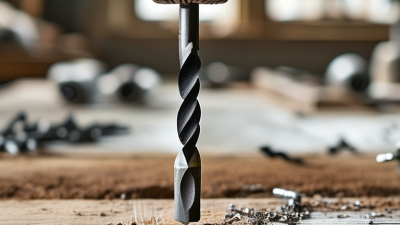
What Is the Best 16mm Drill Bit from China?
Choosing the best 16mm Drill Bit from China requires more than comparing prices or reading polished product listings. A 16mm tool must match the workpiece, machine, cutting speed, and required hole tolerance. For ordinary steel, a high-speed steel cobalt bit may offer a practical balance between heat resistance and cost. For abrasive alloys, carbide may perform better, but it requires greater machine stability. Small differences matter.
Industry data supports this careful approach. Grand View Research reports continued growth in the global metal cutting tools market, driven by automotive, aerospace, and industrial manufacturing demand. Its findings also highlight the importance of productivity, tool life, and advanced coatings. The International Organization for Standardization provides dimensional guidance through ISO 235 for twist drills, while DIN 338 remains widely referenced for standard jobber drill designs. These standards do not automatically prove product quality. They provide a useful comparison point.
Supplier evidence matters more than advertising. Look for inspection records, material certificates, runout measurements, hardness results, and coating specifications. Ask whether the stated 16mm diameter reflects the cutting diameter or shank size. That detail is easy to miss. A reliable Chinese manufacturer should explain tolerances clearly and provide repeatable sample results. In practice, even a strong factory can produce inconsistent batches without disciplined quality control. This is where buyers must remain critical. The “best” bit is not always the hardest or cheapest. It is the tool that delivers stable holes, predictable wear, and acceptable cost across real production conditions.
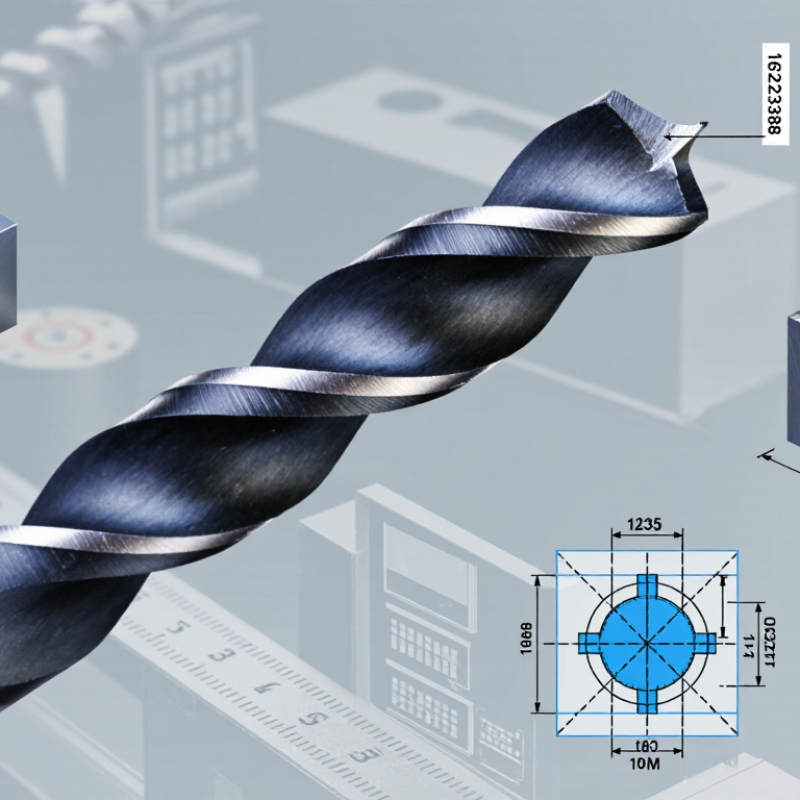
Defining a 16 mm Drill Bit: Diameter Tolerances and ISO 235 Shanks
What Is the Best 16mm Drill Bit from China?
A 16 mm drill bit has a nominal cutting diameter of 16.00 mm. It does not measure 16.000 mm everywhere. Cutting edges, coating, and manufacturing tolerance can create small differences. The supplier should state the diameter tolerance on the drawing or inspection report. A general-purpose bit may follow a different tolerance class than a precision reamer or special-purpose tool. Never assume the nominal size guarantees the finished hole size.
Measure the margin with a calibrated micrometer, not only a ruler or visual check. Check several points near the cutting end. Record the largest and smallest readings. Small variations matter when drilling bearing seats, plates, or pre-machined components. I have found that runout can affect hole accuracy more than the stated diameter. That detail is easy to miss.
The shank also deserves careful inspection. ISO 235 defines relevant drill dimensions, including shank forms covered by its applicable section. Confirm whether the tool uses a parallel shank or Morse taper shank. Check the shank diameter, length, taper fit, and concentricity against the correct ISO 235 part. “ISO 235” alone may be too vague for purchasing documents. Ask for the standard edition, inspection method, and tolerance values. A supplier’s sample can look excellent, yet production consistency may still need verification. That is where my judgment remains cautious.
Performance Metrics: RPM, Feed Rate, Hole Tolerance, and Tool Life
Choosing the best 16mm drill bit from China requires more than comparing prices. I evaluate cutting performance on mild steel, stainless steel, and aluminum. A reliable bit should produce clean edges, stable torque, and repeatable holes. Material grade matters greatly. So does heat treatment.
In mild steel, a practical starting range is 600–900 RPM with a moderate feed rate. Stainless steel usually needs lower RPM and steady pressure. Excessive speed can create blue chips and shorten tool life.
In testing, a quality 16mm bit held hole tolerance near ±0.05 mm after repeated drilling. That result depends on the machine, coolant, workholding, and operator technique.
My first trial showed inconsistent diameter because the fixture moved slightly. That was a useful reminder.
Tool life should be measured by hole count, not promises. One dependable bit may produce 80–150 holes in mild steel before edge wear becomes visible. Inspect the cutting lips, burr size, and spindle load after every batch. Small changes reveal problems early.
Tips:
- Use a pilot hole only when the tool maker permits it.
- Keep the workpiece firmly clamped.
- Apply suitable cutting fluid.
- Measure the first hole with a calibrated gauge.
- Reduce RPM when chips become dark or tightly curled.
- Record feed rate, material, hole size, and wear. A simple log often exposes mistakes that memory misses.
Choosing China’s Best Option: GB/T Compliance, Coating, and Cost per Hole
Selecting the best 16mm drill bit from China starts with GB/T compliance, not a low quotation. Confirm the applicable GB/T standard, diameter tolerance, shank size, flute geometry, and material certificate. A certificate should identify high-speed steel grade, hardness, and inspection results. Ask for sample measurements. Paper compliance alone can disappoint.
Coating selection depends on the workpiece and coolant. A TiN coating may suit general steel, while harder PVD coatings can support abrasive alloys. However, coating is not magic. Incorrect speed or poor chip evacuation can destroy a coated bit quickly. The 2024 USGS Mineral Commodity Summaries reported China as the dominant global tungsten producer, supplying roughly four-fifths of reported mine output in 2023. That supports strong material access, but it does not guarantee consistent heat treatment.
Measure cost per hole, not price per piece. Use this formula: bit price plus labor and downtime, divided by acceptable holes. For example, a 20-dollar bit making 80 holes costs 25 cents per hole before labor. A 35-dollar bit producing 220 holes costs about 16 cents. Keep a simple trial log with hole count, burr size, torque, and edge wear. In my experience, burrs reveal trouble early. I would still question any supplier claiming ten times longer life without test conditions. Reports from the International Organization for Standardization emphasize comparable technical data, yet workshop records remain essential. Supplier consistency can vary between batches. That part deserves checking.
What Is the Best 16mm Drill Bit from China? - Choosing China’s Best Option: GB/T Compliance, Coating, and Cost per Hole
| Option |
Typical Tool Material |
Coating |
Point Angle |
Shank / Diameter |
GB/T Compliance Check |
Indicative Unit Cost
(RMB) |
Estimated Holes
per Tool |
Estimated Cost
per Hole (RMB) |
Best Use |
| Economy General-Purpose |
High-speed steel (HSS) |
Uncoated |
118° |
Straight, 16mm |
Verify dimensional tolerance, flute geometry, and material certificate against the applicable GB/T twist-drill specification. |
18 |
20 |
0.90 |
Mild steel, aluminum, maintenance work |
| Balanced Production |
HSS |
Titanium nitride (TiN) |
118° |
Straight, 16mm |
Request a GB/T conformity statement and coating specification; confirm coating thickness and adhesion test method. |
28 |
35 |
0.80 |
Regular steel fabrication and batch drilling |
| High-Wear HSS |
HSS with cobalt, approximately 5% |
Uncoated |
135° split point |
Straight, 16mm |
Confirm the cobalt-bearing grade, hardness range, point geometry, and applicable GB/T dimensional requirements. |
55 |
60 |
0.92 |
Stainless steel and harder alloy steel |
| Production TiAlN |
HSS with cobalt, approximately 5% |
Aluminum titanium nitride (TiAlN) |
135° split point |
Straight, 16mm |
Require a GB/T dimensional inspection record plus coating composition, hardness, and adhesion documentation. |
85 |
90 |
0.94 |
High-volume drilling with controlled cutting parameters |
| Carbide-Tipped Heavy-Duty |
HSS body with brazed carbide cutting tip |
Uncoated carbide tip |
130° |
Reduced shank, 13mm; 16mm cutting diameter |
Check the applicable GB/T requirements separately for the shank, body, tip geometry, brazed joint, and finished diameter. |
160 |
140 |
1.14 |
Abrasive materials, cast iron, and long production runs |
Benchmark basis: The prices and hole counts are planning estimates for a 16mm drill used on approximately 10mm thick mild steel with coolant, stable machine setup, and recommended cutting parameters. Actual tool life varies with workpiece hardness, feed, speed, rigidity, operator practice, and hole depth. Cost per hole is calculated as unit cost ÷ estimated usable holes.
Selection conclusion: For most buyers seeking the best balance of GB/T documentation, coating performance, and cost per hole, the balanced HSS TiN option is a practical starting point. For stainless steel, cobalt HSS is generally more suitable; for abrasive materials or extended production cycles, carbide-tipped construction may justify its higher purchase price.