How to Choose the Best Masonry Bits for Concrete in 2026?
Choosing the right Masonry Bits For Concrete in 2026 is no longer a simple matter of selecting the cheapest carbide tip. Concrete varies widely. A basement wall may contain soft aggregate, while a bridge deck can include dense stone and steel reinforcement. Each surface changes drilling speed, heat buildup, dust production, and bit life.
Mark Ellison, a masonry-tool specialist with more than two decades of field experience, explains: “A good bit must match the concrete, the hammer, and the hole—not just the package label.” That practical warning matters. SDS-Plus bits suit many home and light renovation projects. SDS-Max options handle larger diameters and heavier impact energy. Diamond core bits can create cleaner openings, especially where vibration must remain low.
Small details decide the result.
Look at the tip design, flute shape, carbide quality, and stated diameter range. Check whether the bit is rated for rotary drilling or hammer action. A drill that feels powerful can still damage a poorly matched bit. Excessive pressure may polish the tip instead of cutting the concrete. I have seen users blame the tool after ignoring this basic relationship.
This guide compares common Masonry Bits For Concrete by performance, durability, hole accuracy, and working conditions. It also considers dust control, reinforcement contact, and realistic project budgets. Some recommendations remain conditional. No bit performs perfectly in every slab, wall, or block. Concrete is inconsistent, and product claims can sound better than field results. The most reliable choice comes from matching the bit to the material, machine, hole size, and expected workload.
Masonry Bit Types and Their Uses in Concrete
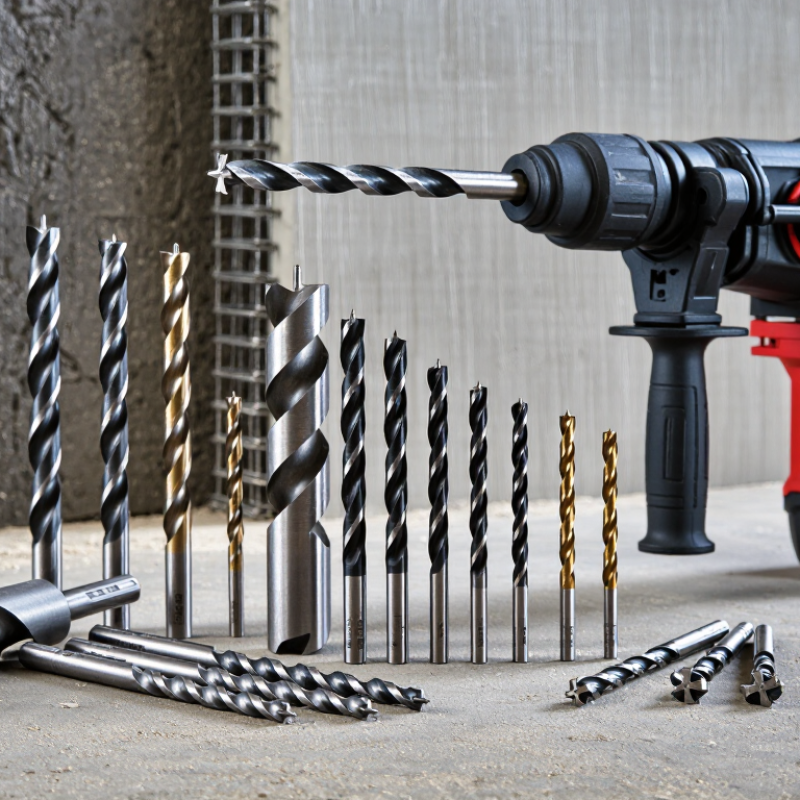
Choosing the right masonry bit begins with identifying the concrete and the hole required. Carbide-tipped masonry bits suit light concrete, brick, and block. They work well with a standard hammer drill for small anchor holes. Use steady pressure, but avoid forcing the bit. Excessive pressure can crack brittle masonry.
Rotary hammer bits are better for dense concrete and repeated drilling. Their carbide cutting heads remove material quickly through hammering action. SDS-style shanks help transfer impact energy and reduce slipping. For large openings, diamond core bits produce cleaner circular holes. They need controlled speed, stable alignment, and suitable cooling. Dry drilling can work for some materials, but heat builds quickly. That detail is easy to overlook.
Choose the diameter and working length carefully. A long bit may reach deep holes, yet it can wander when alignment is poor. Shorter bits usually feel more stable. Clear dust every few seconds, especially in deep holes. Dust reduces cutting efficiency and can hide cracks around the opening. Stop when the tip becomes visibly rounded or unusually hot. Worn carbide is not always obvious. On site, I have seen good bits blamed for poor results when the drill mode was wrong. Rotary-only settings suit some delicate surfaces, while hammer mode suits harder concrete. Still, manufacturer guidance and a small test hole should guide the final choice.
How to Match Bit Size and Shank to Your Drill
How to Choose the Best Masonry Bits for Concrete in 2026?
How to Match Bit Size and Shank to Your Drill
Choosing a masonry bit starts with your drill, not the concrete. Check the chuck type, rated diameter range, and impact setting. A standard round shank suits many keyed or keyless chucks. Hex shanks fit quick-change holders and resist slipping during light work. SDS-style shanks require a matching rotary hammer chuck. They are not interchangeable.
Match the bit diameter to the anchor, sleeve, or clearance hole. A 6 mm bit suits many small fixings, while heavier anchors may need 10 mm or more. Confirm the required hole depth before buying. The fluted length should exceed that depth by several millimetres. Otherwise, dust can pack at the bottom and slow drilling.
I once chose a long bit because it looked more capable. It wandered and produced a rough hole. That choice was wrong. For dense concrete, use an impact-rated bit with a reinforced carbide tip. Start slowly to mark the surface, then increase pressure without forcing the tool. Keep the bit aligned with the wall. Pause occasionally to clear dust, especially in deep holes. A side handle improves control, but I still check the drill manual before switching to hammer mode. Some compact drills accept the shank but cannot safely handle larger diameters.
Key Materials and Tip Designs for Concrete Drilling
Choosing the best masonry bit for concrete in 2026 starts with matching the material to the drilling task. A carbide-tipped bit works well for standard concrete, brick, and block. Its tungsten carbide cutting edge resists abrasion from sand and aggregate. For reinforced concrete, a tougher multi-cutter design can reduce snagging when the tip meets steel. However, no bit stays sharp forever.
Tip geometry also affects control and drilling speed. A two-cutter tip removes material quickly and suits occasional anchor holes. A four-cutter tip usually feels steadier in dense concrete. Its symmetrical head can produce a cleaner hole and reduce vibration. Cross-shaped tips are useful when accurate starting matters. Deep, wide flutes help carry dust away from the hole. That detail is easy to overlook.
Tips: Choose the diameter from the anchor specification, not by guesswork. Use rotary hammer mode only when the bit allows it. Keep the tool aligned, and clear dust every few seconds. In a workshop, I check the hole depth with a marked bit before drilling. This prevents weak fastening. I have also learned that extra pressure often makes drilling worse. Let the carbide tip work. Stop when the bit overheats, wobbles, or produces unusually fine dust. A damaged tip may still cut, but the hole can become oversized and unreliable.
Choosing Bits for Different Concrete Strengths and Projects
How to Choose the Best Masonry Bits for Concrete in 2026?
Concrete strength should guide your bit choice, not just the drill size. Lightweight concrete usually accepts standard carbide-tipped masonry bits. They work well for wall plugs, cable clips, and small anchor holes. For ordinary structural concrete, choose a reinforced carbide tip with a rigid shaft. A rotary hammer usually drills faster than a standard hammer drill.
High-strength concrete needs more careful selection. Four-cutter carbide bits reduce vibration and stay effective when aggregate is dense. Diamond core bits suit large openings for pipes, ducts, or electrical boxes. They cut cleanly, but require steady pressure and suitable cooling. Never force a blunt bit through hard concrete. It can overheat, wander, or damage the hole.
Project conditions matter too. Short holes in a garage wall need less equipment than deep structural anchors. Check the required diameter, depth, and shank system before buying. Remove dust frequently, especially from deep holes. Dust can make a correct bit appear ineffective. I once blamed the drill, but the real problem was a clogged hole. That mistake changed my process. Test one hole first. The concrete may contain unusually hard stone or hidden reinforcement. If the bit suddenly slows against steel, stop and reassess instead of applying more pressure. A suitable bit should match the concrete, the hole, and the tool’s impact energy. No single design performs perfectly everywhere.
How to Choose the Best Masonry Bits for Concrete in 2026?
Typical concrete strength ranges and suitable drilling solutions for different projects.
Use carbide-tipped masonry bits with a hammer drill for light-duty and general-purpose concrete. For structural or high-strength concrete, an SDS rotary hammer and heavy-duty carbide bit are more suitable. Dense reinforced concrete and large openings may require diamond core drilling. Actual performance depends on aggregate, reinforcement, hole diameter, and drilling equipment.
Safety, Maintenance, and 2026 Buying Considerations
Choosing a masonry bit for concrete in 2026 starts with the job, not the packaging.
In my workshop, a pilot hole through cured concrete quickly exposes weak tools. I check the drill’s chuck, impact setting, hole diameter, and concrete hardness before buying. A carbide-tipped bit suits ordinary concrete, while reinforced concrete demands slower pressure and a tougher cutting head. Match the bit length carefully. Excess length flexes and wanders.
Safety should be practical, not decorative.
Wear sealed eye protection, hearing protection, and a properly fitted dust mask rated for fine mineral particles. Avoid loose clothing and gloves near rotating parts. Keep both hands on the drill when possible. Remove debris with controlled suction or a hand pump, never with your mouth. Stop if the bit binds, overheats, or produces unusual vibration. Concrete dust is easy to underestimate.
Maintenance extends performance.
Let the bit cool naturally; sudden water cooling can damage some materials. Brush off dust, inspect the carbide tip, and wipe the shank before storage. A slightly dull bit can still cut, but it wastes power and increases heat. I have kept one too long myself. That was poor judgment. For 2026 purchasing, compare impact resistance, flute design, shank compatibility, stated hole-life data, and replacement availability. Transparent specifications matter more than dramatic claims. Check return terms and safety documentation. Choose a small trial pack when the concrete is unfamiliar. It costs less than guessing.