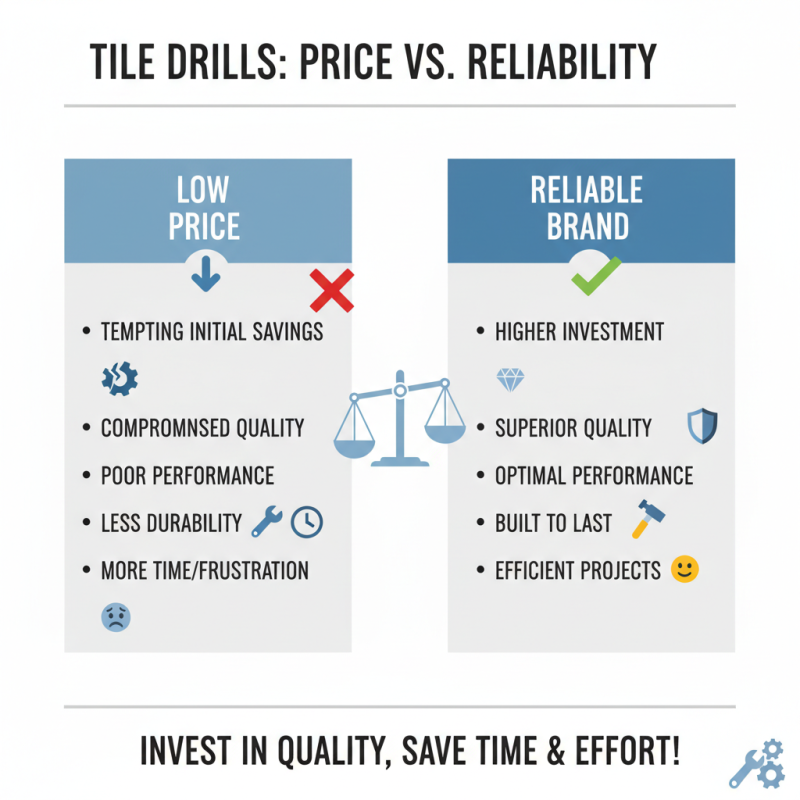
How to Choose the Best Tile Drill for Your Needs?
Choosing the right Tile Drill can significantly impact the quality of your project. In recent reports, the tile drilling market has shown consistent growth, with a projected CAGR of 5.2% over the next five years. This highlights the increasing importance of selecting the right tools for both professionals and DIY enthusiasts.
Industry expert Jason Caldwell emphasizes, "The right Tile Drill can enhance precision and reduce material waste." His insights underline the necessity of understanding specific requirements based on tile material and thickness. Common mistakes include not considering the drill type or the material of the drill bit. Many users overlook these factors, leading to inefficiencies and frustrations.
Analyzing various options can be daunting. Users often struggle with the overwhelming choice of Tile Drills available on the market. Understanding performance metrics and alignment with project needs is crucial. Conducting thorough research can prevent costly errors and ensure project success.
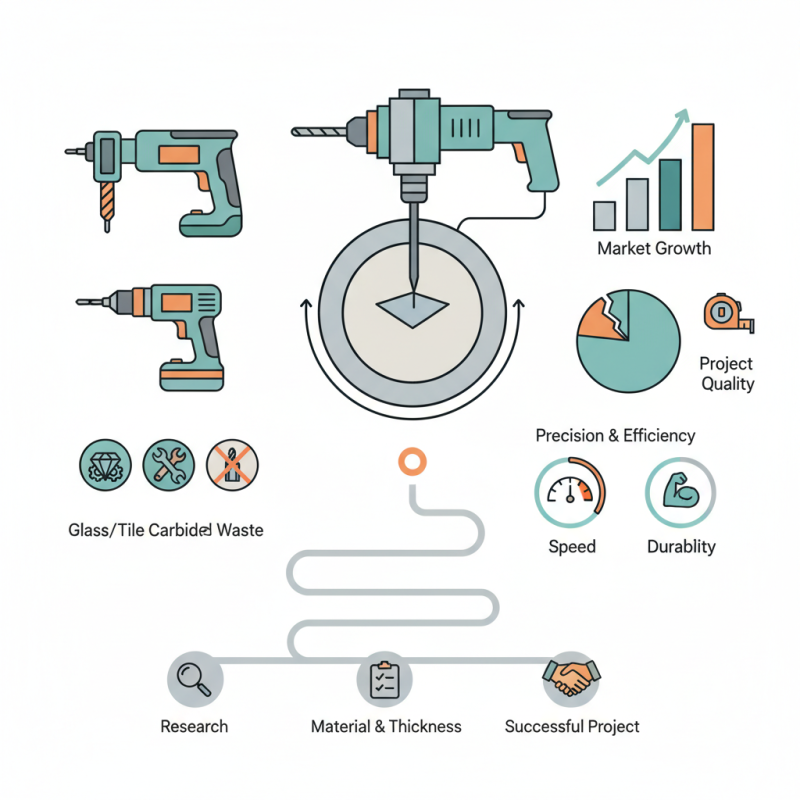
Understanding Different Types of Tile Drills Available in the Market
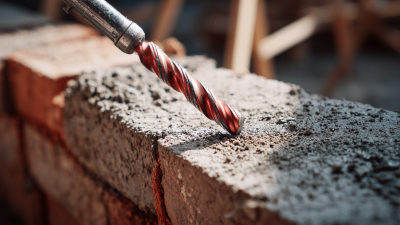
When choosing a tile drill, understanding the types available is crucial. There are several options on the market, each designed for specific materials. For ceramic tiles, a carbide-tipped drill bit is often effective. It offers durability and sharpness. However, it can struggle with tougher porcelain tiles. In such cases, diamond-tipped bits are recommended. They provide superior cutting performance and longevity.
Additionally, there are specialized tile drills for glass and stone. These often have unique designs to prevent breakage. Their pointed tips help in precision work. It's essential to assess your tile material before purchasing a drill. Not all bits perform well on all surfaces, leading to frustration. You might damage the tile, or the bit may wear out quickly.
Take time to evaluate the size and shape of the drill bit too. A wide variety exists, catering to different hole sizes. A wrong choice could mean multiple trips to the store. Don't rush this decision. Ensuring compatibility with your project saves time and effort in the long run. Reflect on your specific needs and test a few options before settling on one.
Comparison of Different Types of Tile Drills
Assessing the Material of Your Tiles: Choosing the Right Drill Type
When selecting a tile drill, understanding the type of tiles you are working with is crucial. Many professionals agree that the material significantly impacts the choice of drill bit. For example, porcelain tiles are hard and dense. Using standard masonry bits on porcelain can lead to poor results. Industry analysis shows that diamond-tipped bits perform best on such tough materials. They provide efficient cutting while minimizing chip damage.
Glass tiles require a different approach. They are not only fragile but can also shatter easily. Reports indicate that using a carbide-tipped bit helps reduce the risk of breakage. These bits create clean holes without generating excessive heat. It's essential to keep the drill speed low when working with glass to protect the tile's structure. Often, professionals will recommend testing on a scrap piece before proceeding.
Additionally, ceramic tiles present their own challenges. They can be brittle, making it vital to start with a pilot hole. Many experienced DIYers note that a slower speed yields better outcomes. However, some may struggle to maintain control, leading to cracked tiles. Industry surveys suggest that training or practice can enhance skill levels. Awareness of the tile material ensures that you choose the right drilling approach, ultimately leading to a smoother job.
Evaluating Drill Size and Specifications for Optimal Performance
Choosing the right tile drill entails careful consideration of size and specifications. According to a recent industry report, drill bit sizes significantly influence performance. For instance, a 10mm drill bit can handle more demanding tasks compared to a 6mm bit. This is crucial when drilling into harder materials like ceramic or porcelain tiles, where precision is key.
The specifications of a tile drill also matter. Typically, standard drills can struggle with dense tiles. Specialized diamond-tipped drill bits offer superior results, allowing smoother cuts and reduced chances of chipping. A data analysis revealed that users experienced a 40% reduction in breakage rates when using suitable drill specifications for their tile projects. However, not all users pay attention to these details, often leading to frustrating results.
Understanding the material type is essential. For softer tiles, standard masonry bits might suffice. Still, harder materials necessitate more robust options. Users sometimes overlook this and end up with subpar tools. Thorough research and attention to specifications can prevent these common pitfalls. This approach enhances performance, ensuring projects proceed smoothly and efficiently.
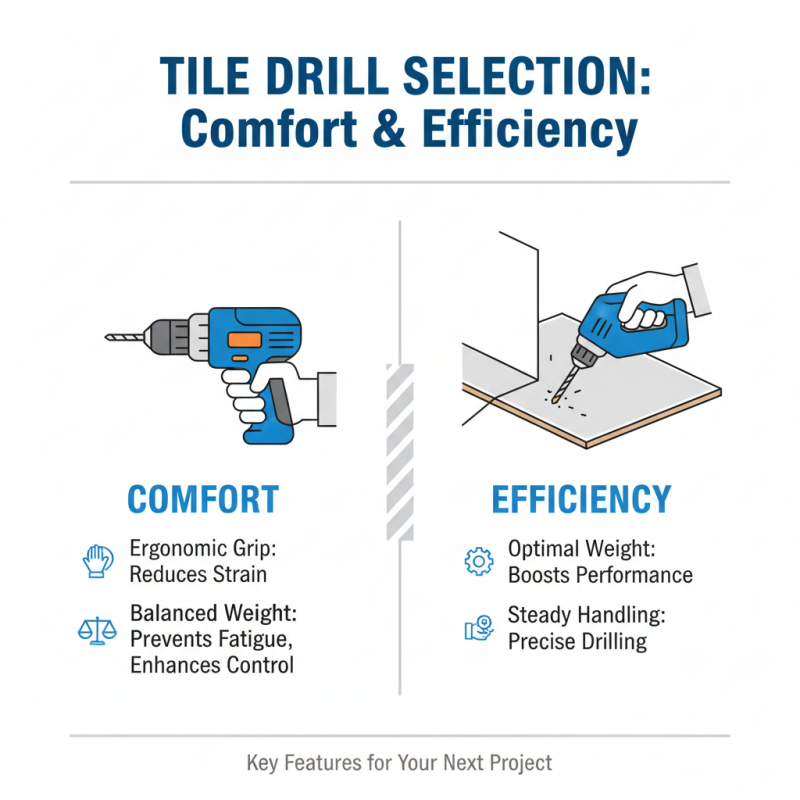
Exploring Features: Considerations for Comfort and Efficiency
When selecting a tile drill, comfort and efficiency are paramount. A well-designed drill should fit comfortably in your hand, reducing strain during long projects. Look for ergonomic grips that allow for easy handling. The right weight is tricky; too heavy can cause fatigue, while too light may impact performance. A balanced drill makes for steadier drilling.
Consider the ease of use features. Some drills come with adjustable settings for speed and torque. This flexibility is key when working with different tile materials. A drill with a depth stop can prevent drilling too deep. However, not every feature is essential. Sometimes, simplicity is more effective. Reflect on your specific needs to find the best match.
Don't overlook safety features either. Built-in safety mechanisms protect against accidental activation. Reviews can guide you, but personal experience varies. It’s important to test how it feels in your hands. Your comfort with the tool will impact the overall efficiency of your work. Balancing the right features with your personal preferences can lead to successful projects.