FREE SHIPPING ON ALL BUSHNELL PRODUCTS

Leave Your Message
A Circular Saw Blade is the cutting component that turns a powered saw into a precise woodworking tool. Its teeth remove material as the blade rotates at high speed. The motor provides motion, while the blade’s geometry controls the cut. That difference matters.
A typical blade includes a steel plate, carbide-tipped teeth, gullets, and expansion slots. The teeth slice the workpiece, and the gullets carry sawdust away from the kerf. The plate supports the cutting edge during rotation. Expansion slots help reduce heat-related movement. The cut begins here.
In practical workshop use, blade selection depends on the material and the desired finish. A blade with fewer teeth usually cuts faster through framing lumber. A blade with more teeth can produce cleaner edges in plywood or trim. Tooth shape also affects cutting behavior, especially across or along the grain. Kerf width influences waste, cutting speed, and motor load.
This article explains how a Circular Saw Blade works from rotation to material removal. It also examines tooth count, blade diameter, arbor size, and cutting direction. These details are easy to overlook. They should not be.
Even experienced users can misjudge a blade’s condition. A dull tooth may increase heat, vibration, and resistance. A clean-looking cut does not always prove safe operation. Correct blade installation, compatible equipment, stable support, and suitable eye protection remain essential. Manufacturer specifications should guide final decisions, because blade performance varies between brands and applications.
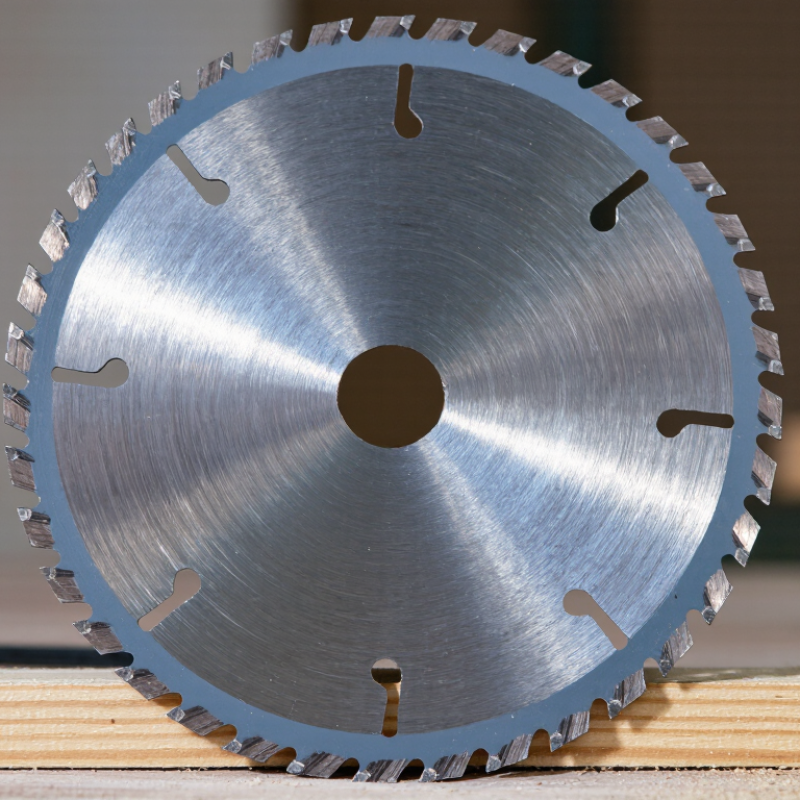
A circular saw blade is a toothed disc designed to cut material as it rotates. It fits onto a circular saw and transfers the motor’s spinning force into a controlled cutting action. The blade’s core purpose is simple: remove a narrow path of material, called the kerf. Its diameter, tooth shape, tooth count, and cutting angle determine how it performs.
A blade with fewer teeth usually cuts wood faster and leaves a rougher edge. More teeth often produce a cleaner finish, but they may cut more slowly. Carbide-tipped teeth can stay sharp through repeated work, although they still require careful handling. In practical use, the correct blade must match the material. A wood-cutting blade is not automatically suitable for metal, masonry, or composite sheets.
The blade should run smoothly and without visible wobble. That matters. Before cutting, an experienced operator checks the arbor hole, mounting direction, and tooth condition. A dull blade may force the saw forward, create excess heat, or increase kickback risk. I have found that many cutting problems begin with choosing the wrong blade, not using too little pressure. Still, blade labels can be confusing, and tooth-count rules are not perfect for every project. Test cuts on scrap material often reveal more than assumptions. Keep both hands positioned correctly, support the workpiece, and allow the blade to reach full speed before entering the material.
| Data Dimension | Definition or Typical Data | Why It Matters |
|---|---|---|
| Tool Definition | A circular saw blade is a round cutting disc with teeth around its perimeter, designed to remove material as it rotates. | Its circular shape enables continuous cutting and efficient material removal. |
| Core Purpose | To make straight cuts, crosscuts, rip cuts, bevel cuts, or specialty cuts in wood, metal, masonry, plastics, and composite materials. | The blade must be matched to both the material and the required cut type. |
| Main Cutting Action | A motor spins the blade around its central arbor; the teeth enter the workpiece sequentially and cut a narrow path called a kerf. | Rotational motion converts motor power into repeated cutting action. |
| Blade Diameter | Common hand-held saw blade diameters include approximately 115–235 mm; larger stationary saws may use larger blades. | Diameter strongly affects the maximum cutting depth and tool compatibility. |
| Cutting Depth | Maximum depth depends on blade diameter, saw design, and cutting angle. A larger blade generally provides greater depth. | The blade must be large enough to pass through the workpiece without exceeding the saw’s rated capacity. |
| Tooth Count | Typical general-purpose blades may have about 18–60 teeth, while fine-finish blades can have more teeth. | Fewer teeth usually cut faster and remove material aggressively; more teeth generally produce smoother cuts. |
| Tooth Geometry | Important features include tooth shape, hook angle, clearance angle, and the spacing between teeth, known as the gullet. | Geometry controls cutting speed, surface finish, chip removal, and resistance to kickback. |
| Kerf Width | Kerf is the width of the slot created by the blade. Thin-kerf blades remove less material than full-kerf blades. | A narrower kerf can reduce cutting resistance and material waste, but it must be suitable for the saw and application. |
| Blade Body | The blade body is the flat disc that supports the teeth and transfers rotational force from the arbor to the cutting edge. | A stable blade body helps maintain accuracy and reduces vibration during cutting. |
| Arbor Hole | The arbor hole is the central opening through which the blade mounts to the saw spindle. | The arbor diameter and mounting configuration must match the saw exactly. |
| Blade Material | Most circular saw blades use hardened steel bodies. Cutting teeth may be made from hardened steel, carbide, or abrasive material depending on the application. | Material selection affects durability, heat resistance, cut quality, and the types of workpieces the blade can cut. |
| Material Compatibility | Wood blades are optimized for timber and sheet goods; metal-cutting blades use suitable tooth designs; masonry blades commonly use abrasive or diamond cutting segments. | Using an unsuitable blade can cause poor performance, overheating, tooth damage, or unsafe operation. |
| Rotational Speed | The blade’s maximum permitted revolutions per minute must be equal to or greater than the saw’s no-load speed. | Exceeding the rated speed can cause blade failure and presents a serious safety hazard. |
| Feed Direction | The operator guides the saw through the workpiece while maintaining a steady feed rate appropriate for the material and blade. | Excessive force can overload the motor, deflect the blade, damage teeth, or increase kickback risk. |
| Typical Cut Types | Rip cuts follow the grain; crosscuts run across the grain; bevel cuts are made at an angle; plunge cuts begin within the workpiece. | Tooth count and geometry should be selected according to the desired cut and workpiece structure. |
| Safety Features | Important safety elements include a blade guard, secure arbor fastening, correct blade orientation, stable workpiece support, and appropriate personal protective equipment. | Correct setup reduces exposure to rotating teeth, flying particles, kickback, and accidental contact. |
| Replacement Indicators | Replace or service a blade when teeth are chipped, dull, missing, overheated, excessively vibrating, or producing rough and uneven cuts. | A damaged or worn blade reduces accuracy and can increase operating risks. |