FREE SHIPPING ON ALL BUSHNELL PRODUCTS

Leave Your Message

Why Choose an Oscillating Tool for Your Business?

Why Choose an Oscillating Tool for Your Business?

An Oscillating Tool can turn one compact platform into a practical workshop asset. It cuts, sands, scrapes, grinds, and removes grout with controlled, short strokes. For contractors, maintenance teams, and renovation businesses, that versatility can reduce tool changes during tight service calls. A blade can reach beneath a door frame. A sanding pad can follow a narrow stair edge. Small details matter when labor time is expensive.

Market evidence supports careful investment in cordless equipment. Grand View Research reported that the global power tools market was valued at approximately USD 32.7 billion in 2023. Its report also projects continued growth through 2030, supported by construction, manufacturing, and home improvement demand. The Freedonia Group has similarly identified repair, remodeling, and professional construction as important power-tool applications. These reports describe broad categories, not guaranteed Oscillating Tool sales. That distinction matters.

Professional selection requires more than counting accessories. Buyers should compare runtime, vibration control, blade availability, warranty support, and serviceability. IEC 62841 safety requirements provide a useful reference for portable motor-operated tools. NIOSH guidance also highlights the importance of managing hand-arm vibration exposure. A comfortable grip helps, but it does not replace safe work practices. The business case is strong, yet imperfect. An inexpensive model may fail under daily load. A premium model may sit unused in a small shop. The right choice depends on work volume, materials, operator experience, and measurable downtime. This guide examines those factors with practical evidence, not showroom promises.
Why Choose an Oscillating Tool for Your Business?

What Is an Oscillating Tool and How Does It Work?

An oscillating tool uses a small blade or attachment that moves rapidly from side to side. Unlike a circular saw, it does not spin continuously. This short, controlled movement helps workers make accurate cuts in wood, plastic, drywall, grout, and thin metal.

The motor transfers power through an internal drive mechanism. The attachment swings through a narrow angle, often only a few degrees. That limited motion improves control in tight spaces. During renovation work, I have used this type of tool to cut beneath door frames and remove damaged grout without disturbing nearby surfaces. It can also sand corners where larger equipment cannot reach. Still, it is not a miracle tool. Thick materials may require patience, several passes, and the correct accessory. Choosing the wrong blade can create heat, rough edges, or wasted time.

Tips: Match the attachment to the material. Use a fine-tooth blade for cleaner wood cuts and a carbide accessory for tough grout. Keep both hands steady when possible, and let the tool work without heavy pressure. Wear eye and hearing protection, especially during long tasks. Check the accessory before every shift. A loose attachment can reduce accuracy and create avoidable risk. Businesses should also record maintenance and train new operators with simple practice cuts. I sometimes rush setup, and that is exactly when small mistakes become expensive.
Which Business Tasks Can an Oscillating Tool Handle?

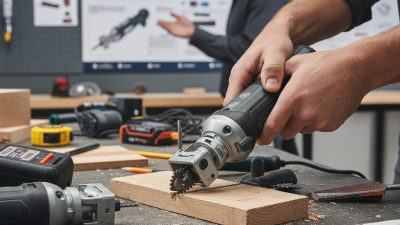
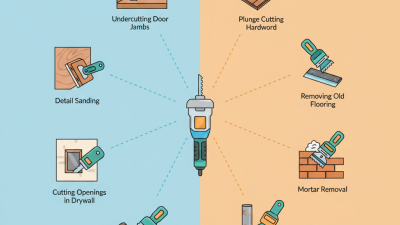
An oscillating tool can handle many routine business tasks in maintenance, renovation, and installation work. Its compact head reaches corners where larger equipment cannot. It can trim door casings, cut damaged flooring, and remove old sealant around sinks. A flush-cut blade can shorten wooden shims without disturbing nearby surfaces. That matters.

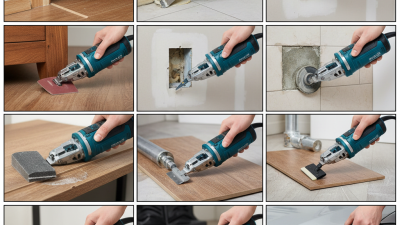
In commercial repair work, technicians often use it to remove grout, open drywall for cable access, and cut plastic or copper pipe sections. A scraper attachment can lift adhesive from concrete or tile. Sanding pads help smooth small edges before painting or fitting new materials. The tool also suits cabinet installation, especially when a precise notch is needed around a wall outlet.

Keep it controlled.

Practical experience shows that attachment choice matters as much as motor power. A blade designed for wood may perform poorly on hardened fasteners. Test a hidden area first, because vibration can chip brittle tile or mark finished surfaces. Wear eye protection, hearing protection, and suitable dust control equipment. A vacuum connection can make indoor work cleaner, but it does not remove every hazard. Not every cut. For structural materials, electrical systems, or concealed plumbing, qualified inspection remains necessary. The tool saves time, although rushing can create expensive rework.

What Benefits Does It Offer Professional Workflows?

An oscillating tool gives professional crews controlled movement in tight spaces. Its compact head reaches corners, door jambs, cabinet edges, and finished surfaces. With the right blade, it can flush-cut trim, remove grout, scrape adhesive, or sand a narrow edge. Accessory changes also reduce the need to carry several specialized tools between work areas. That matters when every room contains different materials.

The U.S. Bureau of Labor Statistics recorded 888,220 private-industry injuries involving days away from work in 2022. Not every case relates to tool selection, but repeated force remains a practical concern. A well-chosen oscillating tool can reduce hand sawing and awkward scraping. Its benefit depends on grip, vibration control, dust extraction, and correct accessory selection. Small gains accumulate across a busy shift. They also protect consistency.

According to Liberty Mutual’s 2024 Workplace Safety Index, serious workplace injuries cost employers an estimated 58.5 billion dollars in 2022. Reducing effort cannot replace training or safe procedures. It can support them. In field use, the tool feels especially valuable during repair work, where surfaces are hidden and access is limited. It is not a universal fix. Excessive pressure still overheats blades and slows the cut. Poor extraction can leave dust on nearby finishes. Professional workflows improve when operators measure these trade-offs, rather than treating speed as the only result.

Why Choose an Oscillating Tool for Your Business?

Typical operating ranges support multiple professional tasks with one compact platform.

Oscillating tools commonly operate across approximately 8,000–20,000 oscillations per minute (OPM). This broad range allows professionals to switch between sanding, precision cutting, grout removal, and scraping applications by changing the accessory and adjusting speed. The ranges shown are representative operating bands commonly published for professional-grade oscillating tools; exact performance depends on the tool, accessory, and material.

How Should Businesses Compare Features, Costs, and Durability?

For a business, an oscillating tool should be judged by job requirements, not excitement. Compare oscillation angle, speed control, grip comfort, noise, and dust management. A narrow blade helps with door casings, while a sanding pad suits repair work. Quick accessory changes can reduce idle time between tasks. That matters on busy renovation sites.

Cost needs a wider lens. Grand View Research valued the global power tools market at about $32.9 billion in 2023 and expects continued growth through 2030. This suggests strong demand, but market growth does not prove a tool is economical. Calculate total cost of ownership. Include purchase price, blades, batteries, charging equipment, maintenance, and downtime. A low-priced kit may become expensive after frequent accessory replacement. The calculation is easy to underestimate.

Durability deserves evidence. Check housing quality, switch protection, battery availability, warranty terms, and repair support. OSHA advises employers to maintain hand and power tools properly and inspect them before use. The U.S. Bureau of Labor Statistics recorded about 2.6 million nonfatal private-industry workplace injuries and illnesses in 2023. Safe handling cannot be separated from equipment selection. Test a tool on actual materials, such as grout, pine trim, and thin sheet metal. Record heat, vibration, cutting speed, and operator fatigue. One trial is not enough. Real conditions are messier. A tool that feels excellent for ten minutes may disappoint after a full shift.

Why Choose an Oscillating Tool for Your Business? How Should Businesses Compare Features, Costs, and Durability?

The figures below represent typical market ranges for professional-grade oscillating tools. Actual specifications vary by model, application, accessories, battery capacity, and operating conditions.

Business Evaluation Criteria Corded Professional Tool Cordless Professional Tool Compact Cordless Tool
Best Business Applications Workshop production, continuous renovation work, flooring, carpentry, and fixed-site maintenance Construction, facilities maintenance, electrical work, plumbing, and mobile service operations Light repair, finishing work, cabinet installation, automotive trim, and confined spaces
Typical Purchase Cost $80–$250 for the tool and standard accessories $150–$350 for a tool kit with charger and one battery $100–$250 for a tool kit with charger and one battery
Additional Battery Cost None required $50–$180 per additional battery, depending on voltage and capacity $35–$120 per additional battery, depending on voltage and capacity
Power Source AC mains electricity, commonly 120 V or 230 V depending on region Rechargeable lithium-ion battery, commonly 18 V or 20 V maximum-rated systems Rechargeable lithium-ion battery, commonly 10.8 V, 12 V, or similar systems
Typical No-Load Oscillation Speed 8,000–20,000 oscillations per minute 8,000–20,000 oscillations per minute 5,000–20,000 oscillations per minute
Typical Oscillation Angle Approximately 1.4°–4.0° total arc Approximately 1.4°–4.0° total arc Approximately 1.4°–3.6° total arc
Variable-Speed Control Usually included; suitable for precise material control Usually included; electronic controls help maintain speed under load Commonly included, but load control may be less consistent
Typical Tool Weight Without Accessories 1.0–1.6 kg 1.2–2.0 kg including a standard battery 0.8–1.4 kg including a compact battery
Continuous-Work Capability High; suitable for extended operation with no battery interruptions High when spare batteries and a rapid charger are available Moderate; better suited to shorter tasks and lighter materials
Typical Battery Runtime Not applicable Approximately 20–60 minutes of active cutting or sanding per battery, depending on capacity and load Approximately 15–45 minutes of active cutting or sanding per battery, depending on capacity and load
Mobility on Job Sites Limited by access to power outlets and extension cords Excellent; no power cord during operation Excellent; particularly effective in tight or elevated work areas
Noise Level During Operation Typically about 80–95 dB(A), depending on material and accessory Typically about 78–95 dB(A), depending on material and accessory Typically about 75–92 dB(A), depending on material and accessory
Vibration Management Often includes rubberized grips and basic vibration isolation Professional models commonly combine rubber grips, electronic control, and improved isolation Basic isolation is common, but smaller tools may transmit more vibration under heavy load
Typical Cutting Depth in Wood Approximately 40–70 mm with a suitable plunge-cut blade Approximately 35–65 mm with a suitable plunge-cut blade Approximately 20–45 mm with a suitable plunge-cut blade
Common Materials Wood, plastics, drywall, grout, soft metals, sealants, and adhesives Wood, plastics, drywall, grout, soft metals, sealants, and adhesives Wood, plastics, drywall, grout, sealants, and light-duty soft metals
Accessory Compatibility Broad compatibility; many models accept universal or quick-change accessories Broad compatibility; quick-change systems are common in professional models Generally broad compatibility, although accessory size and power capacity may be limited
Dust-Extraction Capability Frequently available through an accessory or external vacuum adapter Frequently available through an accessory or external vacuum adapter Available on some models; smaller ports and lower airflow are common
Overload and Thermal Protection Usually protected by the motor design or an electronic safety system Commonly includes electronic overload, overheat, and battery protection Commonly included, but protection may activate sooner during demanding work
Durability Considerations Fewer wear components related to power delivery; well suited to stationary, repetitive work Durable when protected from dust, moisture, impacts, and repeated deep discharge Durable for light and medium workloads; less suitable for continuous heavy cutting
Maintenance Requirements Inspect the cord, plug, switch, vents, accessory clamp, and carbon brushes if applicable Clean vents and contacts, inspect the clamp, and maintain battery storage and charging practices Clean vents and contacts, inspect the clamp, and avoid overloading the compact motor
Downtime Risk Power outages, damaged cords, and unavailable outlets can interrupt work Downtime can result from depleted batteries, charging delays, or battery replacement needs Higher risk during multiple shifts because batteries generally have lower capacity
Best Cost-Control Strategy Choose for high-utilization workshops where electricity is available and uninterrupted runtime matters Standardize battery platforms across teams to share chargers and batteries between tools Choose for low-to-medium utilization where low weight and lower initial kit cost are priorities
Overall Business Fit Best for maximum runtime and predictable workshop productivity Best overall balance of mobility, power, productivity, and professional durability Best for portability, precision, and lower-intensity service work
Business purchasing tip: compare total cost of ownership rather than tool price alone. Include batteries, chargers, replacement accessories, expected utilization, maintenance, downtime, operator comfort, and the availability of local service support.

What Safety and Maintenance Practices Support Long-Term Use?

Why Choose an Oscillating Tool for Your Business?

An oscillating tool can handle cutting, sanding, scraping, and grout removal in tight spaces. Its compact movement helps workers control delicate repairs near walls, cabinets, and finished surfaces. In daily use, safety depends less on speed and more on disciplined habits. I have seen small oversights, such as a loose accessory, create unnecessary vibration and poor results.

Tips: Inspect the tool before every shift. Check the cord, battery, vents, switch, and accessory lock. Wear eye protection, hearing protection, and a suitable dust mask when materials produce fine particles. Keep both hands steady, and avoid forcing the blade through resistant surfaces. A slower cut is often safer. Not always faster.

Disconnect power before changing accessories or cleaning the housing. Let the tool cool after demanding work, especially when cutting dense materials. Remove dust from ventilation openings with a dry brush or approved air method. Store accessories in a dry container, and replace worn blades instead of sharpening them improperly. Supervisors should provide practical training, define inspection records, and match each accessory to its intended material. Even experienced workers can become careless during repetitive tasks. That is worth reviewing.